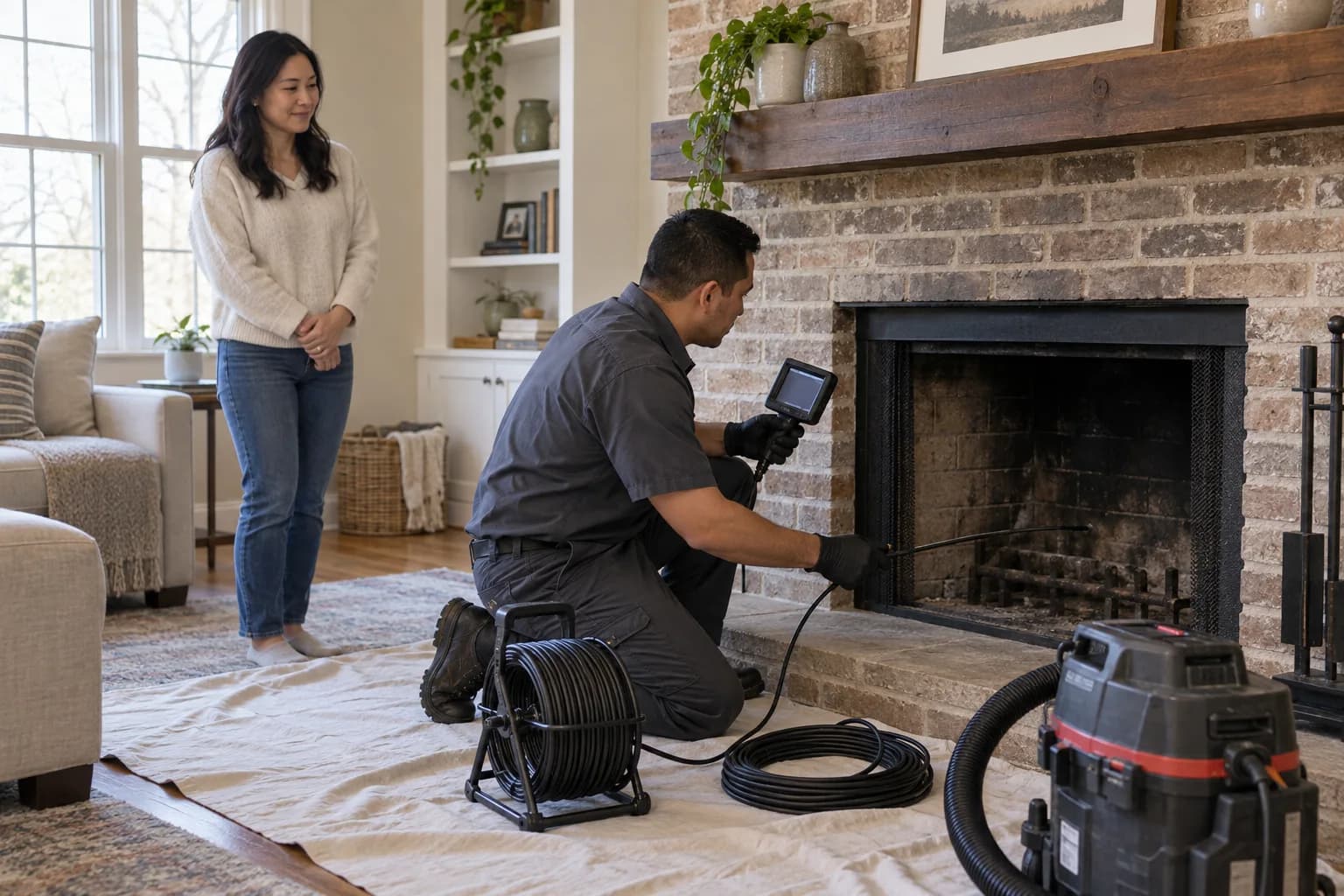
Gas appliance assessment
What the scope should cover
Ask whether the technician is qualified for the appliance and gas work involved. Confirm appliance checks, vent connections, termination and any diagnostic testing. Chimney certification alone does not establish local gas-work authorisation.
What to keep after the visit
Request appliance and vent identification, findings, replaced parts and unresolved concerns. A cleaned glass panel is not documentation of a complete vent assessment.
The question worth asking
“Will you assess the appliance and vent together, and who handles any gas-side repair?”
Ask for the answer in the written scope. If the work changes after access or inspection, request a revised scope and price before approving the additional work.
Prepare without taking risks
Provide model information. If gas is smelled, leave the building without operating switches and contact the gas utility or emergency services from outside. Do not wait for a directory enquiry.
Confirm appointment access, who will be present and what records to have ready. Preparation does not mean dismantling the appliance, climbing the roof or reproducing a dangerous symptom.
Compare companies for this particular job
- Confirm experience with your chimney type and appliance model. A company that cleans masonry fireplaces may not service every gas or pellet appliance.
- Ask who performs the work, what credentials apply to that person and how you can verify them with the issuing organisation.
- Check current insurance and any local licensing or permit requirements directly. A profile badge is not proof of every qualification.
- Compare access, materials, diagnostic work, disposal, exclusions and follow-up. A lower total can represent a smaller scope.
Read the detailed homeowner guide
The service brief helps you commission the visit. Our longer guide explains terminology, system differences, examples, FAQs and its supporting sources.
Read the full gas fireplace venting inspections guideSafety background: USFA, CPSC and recognised industry resources. These buying questions are editorial guidance, not installation instructions or an assessment of your home.
Make the written proposals comparable
Ask each company to answer the same scope questions. A higher or lower price may reflect different work, access or deliverables.
- Appliance and vent type
- Identify the exact appliance and venting arrangement; appearance alone is insufficient.
- Technician competence
- Confirm the company performs the relevant gas-appliance work and any locally required qualification applies.
- Service boundary
- Distinguish venting inspection from gas supply, combustion and appliance repair work.
A misunderstanding worth avoiding
The absence of wood soot does not establish that a gas appliance or its venting is operating correctly.
A question homeowners ask
Does a chimney sweep automatically service gas appliances?
No. Ask about the exact make, model and task. Some companies inspect venting but refer burner, valve or other gas work to another qualified trade. Establish that boundary before booking rather than assuming the visit includes everything.
The record to keep for the next visit
Request the appliance identification, components examined, any measurements the technician considers relevant, limitations and explicit next steps. A gas smell requires emergency action, not an ordinary directory appointment.
Build an evidence and follow-up recordTake the service question to your location
Use the local guide to prepare questions about access, building history and the authority responsible for your address. The service brief is national guidance; local permits and current burn restrictions must be checked separately.