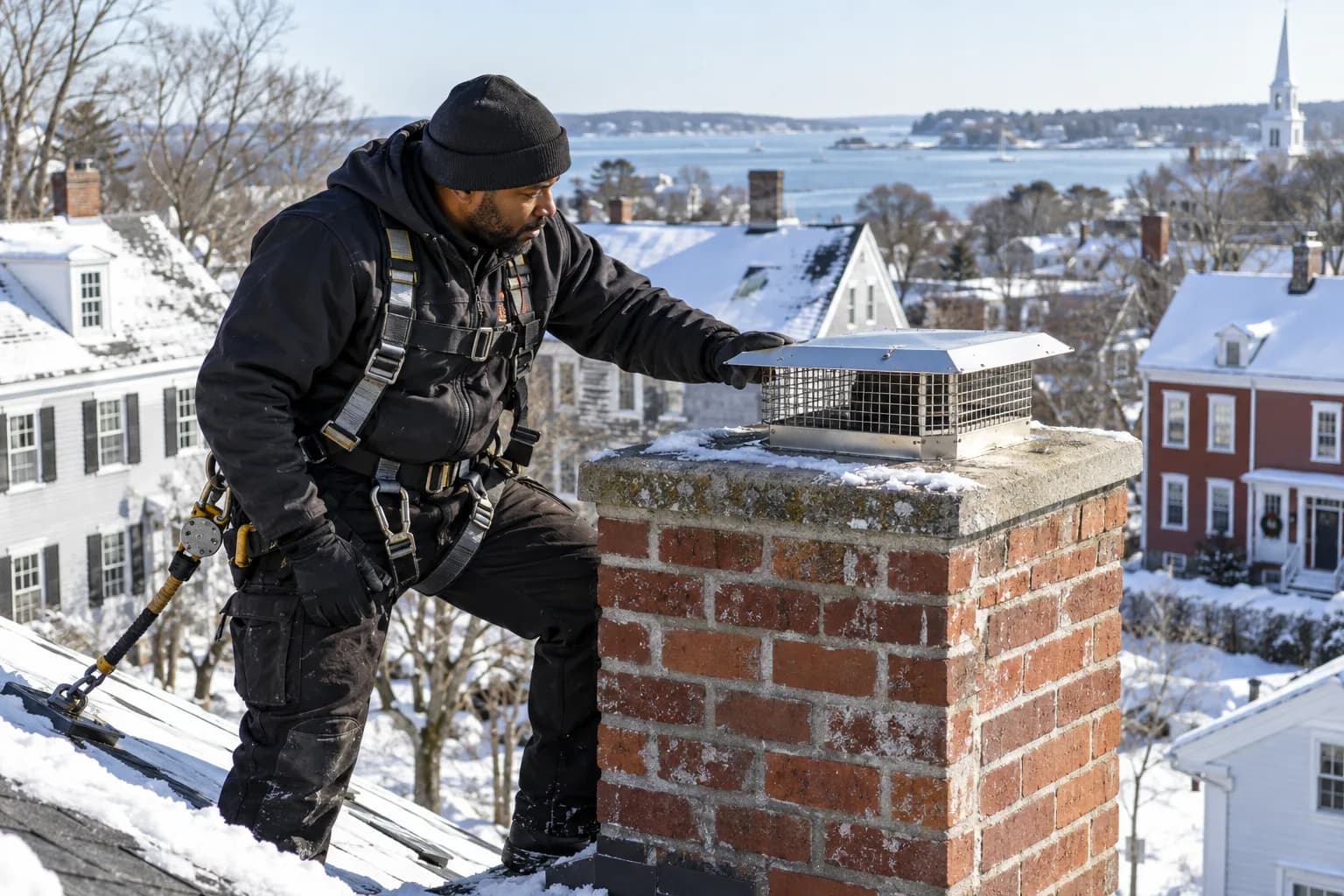
Possible causes, not a remote diagnosis
Storm damage, attachment deterioration or an incorrect component may be involved. The rest of the termination and chimney should be assessed for related damage.
What to document safely
Photograph the fallen part, record when it was discovered and find the chimney or appliance model information. Keep away from loose overhead material.
Keep the appliance model, fuel, previous report and date of last service together. A clear sequence of events can be more useful than deciding in advance which component must be replaced.
Your next service conversation
Have a chimney professional identify the correct termination and check for obstruction or animal activity before fitting it. Ask whether the manufacturer specifies an exact replacement.
Chimney cap installation and replacement →Can I cover the opening temporarily?
Do not improvise a cover or use a system with a blocked termination. Ask a professional about safe weather protection and leave the appliance unused until its condition is assessed.
Ask for evidence before approving repairs
Request a report that distinguishes what was observed from what remains uncertain. Ask the company to identify any area it could not inspect and whether another trade is needed. If a major repair is proposed, compare a second written scope using the same appliance details and findings.
Do not treat a directory profile, an estimate or this page as clearance to use an appliance. Ask the attending professional what must be resolved before reuse.
Read the detailed guide and its sourcesTake the service question to your location
Use the local guide to prepare questions about access, building history and the authority responsible for your address. The service brief is national guidance; local permits and current burn restrictions must be checked separately.